January–March: the herds concentrate on the short-grass plains around Ndutu and the southern Serengeti, where the nutrient-rich volcanic soil supports the year's calving season.
April–May: as the plains dry out, the migration begins its slow push north and west through the central Serengeti and into the western corridor, crossing the Grumeti River along the way.
June–July: herds continue north through the western corridor toward the Mara region, with the first river crossing attempts typically beginning in the second half of July.
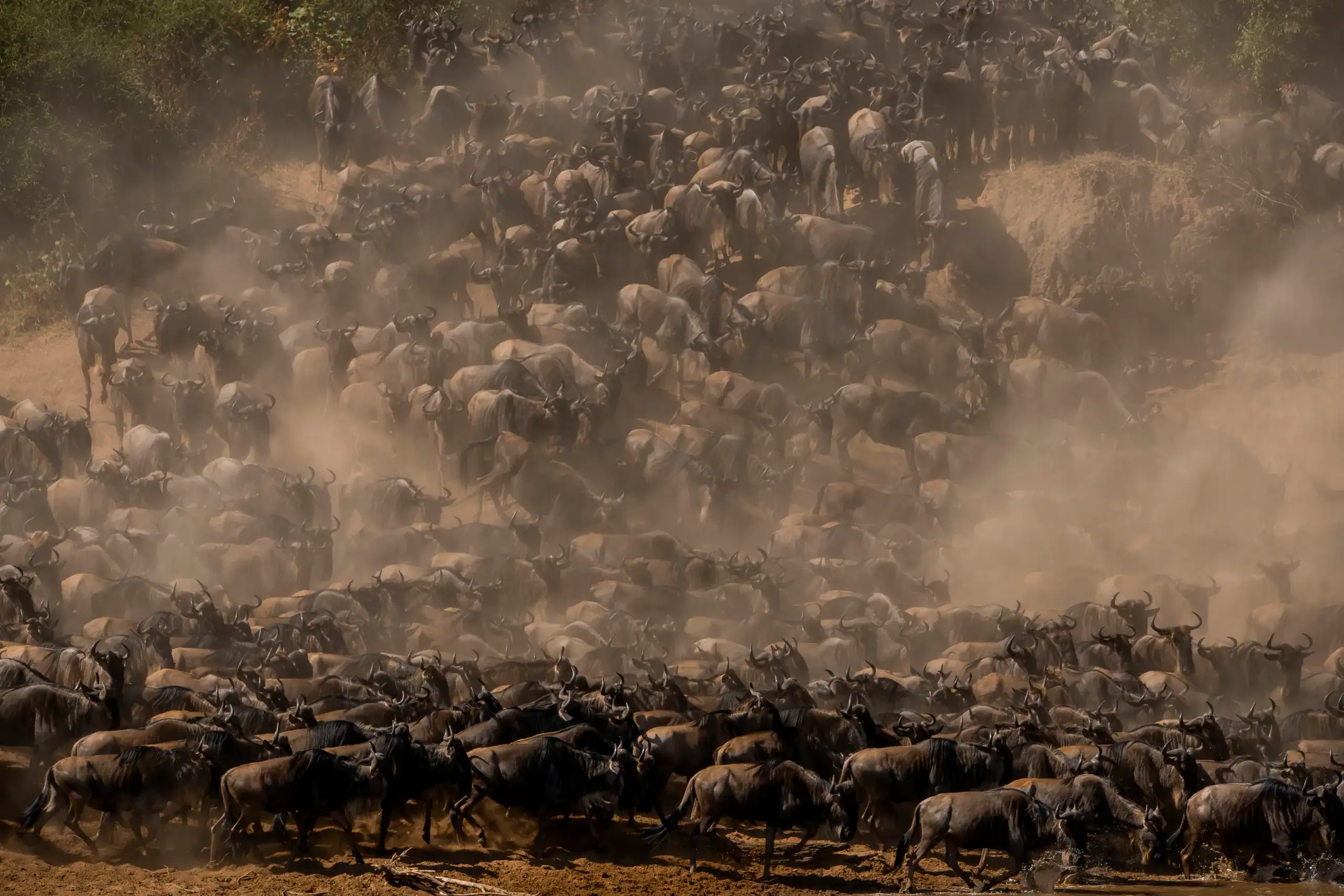
August–October: peak crossing season in the northern Serengeti and Maasai Mara, as herds repeatedly cross and re-cross the Mara River searching for fresh grazing.
November–December: the short rains trigger the return journey south, back toward the calving grounds, closing the cycle for another year.
Where to stay each month
- January – March: Ndutu or the southern Serengeti plains
- April – May: central Serengeti (Seronera)
- June: central Serengeti or the Western Corridor
- July: Western Corridor or northern Serengeti
- August – October: northern Serengeti (Kogatende, Lamai)
- November: eastern Serengeti and Lobo
- December: central and southern Serengeti
The cycle is a guide, not a timetable
The herds move with the rain. A late rainy season can hold them in the south for weeks; an early one sends them north sooner. That is why we place you in a mobile or well-located camp for your dates and keep a close eye on the herds’ position in the weeks before you travel.
How many days do you need?
For the calving season, two or three nights in Ndutu is enough to see births and hunts. For river crossings, plan at least three or four nights near the Mara River: crossings happen most days in season, but never to a timetable.